
our services
who we serve
The Counseling Program at The Jacob Center serves individual youth (8+), adults, and parents/caregivers with trauma related concerns who face barriers to care (financial or otherwise). Our approach is rooted in a whole-person, trauma responsive, and anti-oppressive lens. We support LGBTQ+ and BIPOC clients. We honor and respect individual’s identities, trauma histories, and unique needs.
therapy services (In-person and telehealth options available)
Individual Therapy:
We offer therapy for concerns related to: trauma, complex trauma, anxiety, depression, neurodiversity, substance use, self-esteem, life transitions, identity exploration, and more. Our work uses various evidence-based research and modalities including (but not limited to):
Internal Family Systems
Somatic (body) based interventions
Polyvagal Theory
Dialectical Behavioral Therapy (DBT)
Cognitive Behavioral Therapy (CBT)
Mindfulness
Solution-Focused Therapy
Psychoeducation
And more…

program Overview
our philosophy
At The Jacob Center, we recognize that trauma impacts all areas of an individual’s life – physical and mental health, behavior, relationships, our community, and more. We also recognize the vast impact trauma has across all areas of our world – colonization, social determinants of health, systemic oppression, public health, and so on. Therefore, we see our work as trauma therapists as needing to embrace these complexities. We see it as collaborative, advocacy-focused, fluid, and above all, client-driven and responsive to trauma and neuroscience informed perspectives and needs.
Our work is fueled by connection and knowing that trauma healing/integration does not happen in a silo. It happens relationally, between nervous systems, from the inside out. Creating an environment of felt safety is crucial to the therapeutic process; it paves the way for a deeper therapeutic alliance and enables clients to engage more fully in the process. Each person already possesses their own innate strengths, wisdom, and resilience – so when clients feel safe enough to show us these resources, they will inevitably guide the work.
Get in touch to learn more about counseling or click here to apply for counseling services now.
about our counseling program
what is trauma?
Trauma is commonly defined as a harmful or life threatening event that significantly impairs an individual’s emotional, social, and physical well being.
Complex trauma describes both the exposure to multiple traumatic events—often of a relational nature—and the wide-ranging, long-term effects of this exposure.
Fight, flight, or freeze is the physiological (body/brain) reaction that occurs in response to a perceived harmful event, attack, or threat to survival.
The brain develops from the lowest survival regions of the brain up to the highest thinking parts of the brain. Trauma response (fight/flight/freeze) is interpreted, stored, and remembered in the lower survival parts of the brain and in the body itself.
So… what does all that mean?
Trauma and the response to that trauma occurs on a mind-body level. That is why we can’t think or talk our way out of trauma or trauma triggers. Trauma therapy, then, requires a mind-body approach that seeks to integrate the whole self- body, brain, relationships, experiences, etc.
Meet Our Counseling TeamGet started: Fill out our contact formAt The Jacob Center, we recognize that trauma impacts all areas of an individual’s life –
Our services include individual therapy and group therapy for concerns related to: trauma, complex trauma, anxiety, depression, neurodiversity, substance use, self- esteem, and more.


scheduling and payment options (dedication to health equity)
scheduling and payment
We are dedicated to advancing health equity in our community, and see our role as increasing access to these trauma therapy services for those with barriers to care (financial or otherwise). We offer evening and weekend appointments to accommodate different scheduling needs.
We accept Medicaid, United Healthcare, some other insurances, and will also offer sliding scale options for those who are uninsured/underinsured and demonstrate financial need or other barriers to care. Please inquire about specific insurances and sliding scale options.
Did you know? Health First Colorado (Colorado’s Medicaid program) members have comprehensive mental health and substance use disorder services through their regional organization. There are no co-pays for Health First Colorado behavioral health services. Click here to learn more.
Those interested in counseling program services can contact our Counseling Team here or fill out this form
accepting clients now
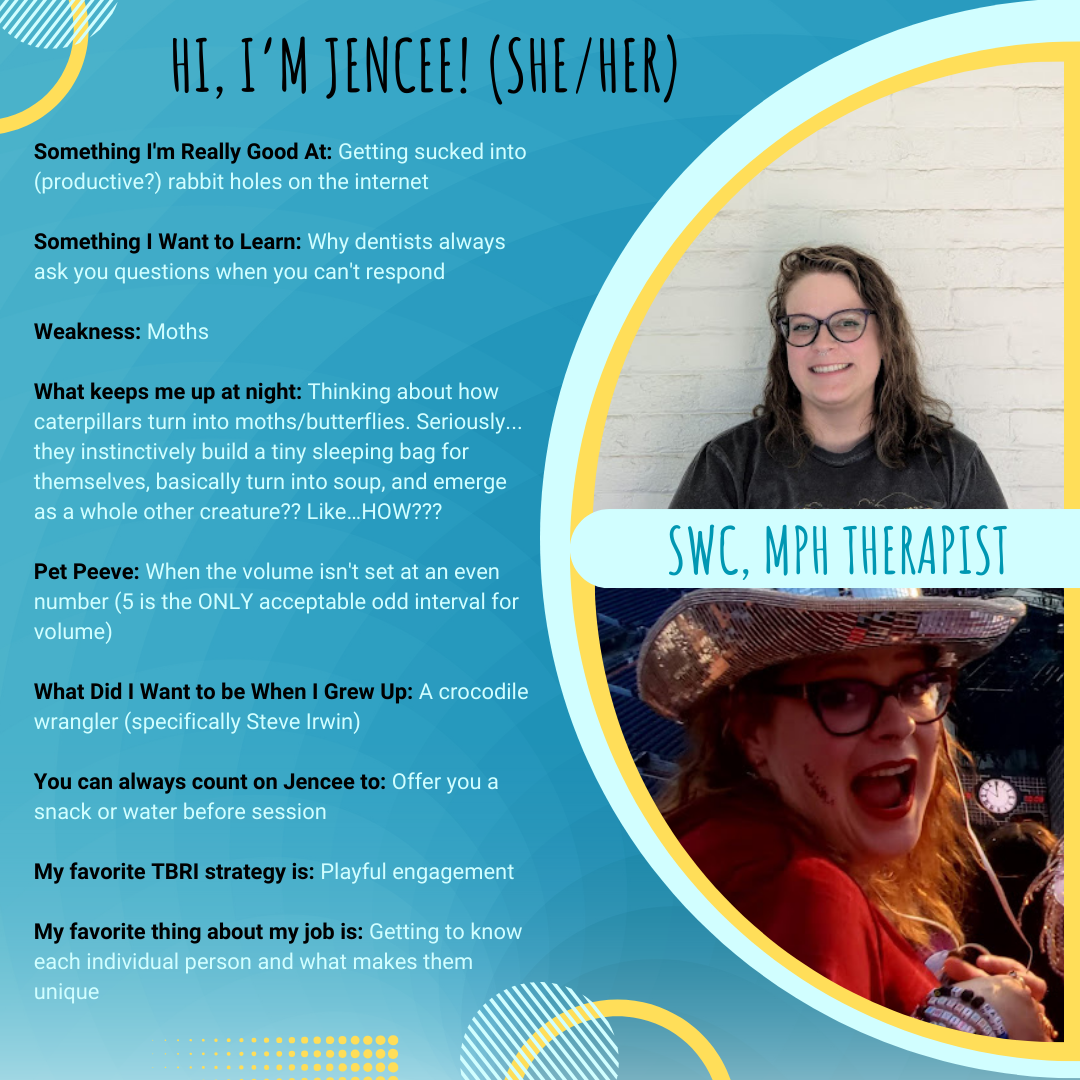
Jencee began at the Jacob Center in July 2024, is a therapist with dual Master Degrees in Public Health (MPH) and Social Work (MSW) from Colorado State University and is a Social Work Candidate. She aspires to support and build environments that are inclusive and affirming of individuals and communities that experience injustice. This includes gaining a deeper understanding of risk and resilience in marginalized communities by practicing culturally responsive participatory research. In her free time, Jencee enjoys making gains in the gym, exploring new music with friends, and obtaining obscure knowledge in order to be prepared for any impromptu trivia.
What is working with Jencee like?
Jencee initially went to school for Chemistry but worked at a residential treatment facility in undergrad and enjoyed working with this population so much she changed careers! She approaches therapy with person-centered, strengths-based, and trauma-responsive techniques that include polyvagal theory, body-based approaches, mind-body connection, Dialectical Behavior Therapy (DBT), and solution-focused therapy. She believes in the healing power of humor and always promotes clients meeting their sensory needs.
- I approach therapy through the lens of:
- You are the expert of your own life
- If you feel unsafe or unsupported, I haven’t done my job.
- Trauma is stored in the body so addressing physical symptoms of mental health is important for healing.
- I’m a lifelong learner who is always open to new ideas and feedback. If something doesn’t work for you, let’s work together to figure out what does.
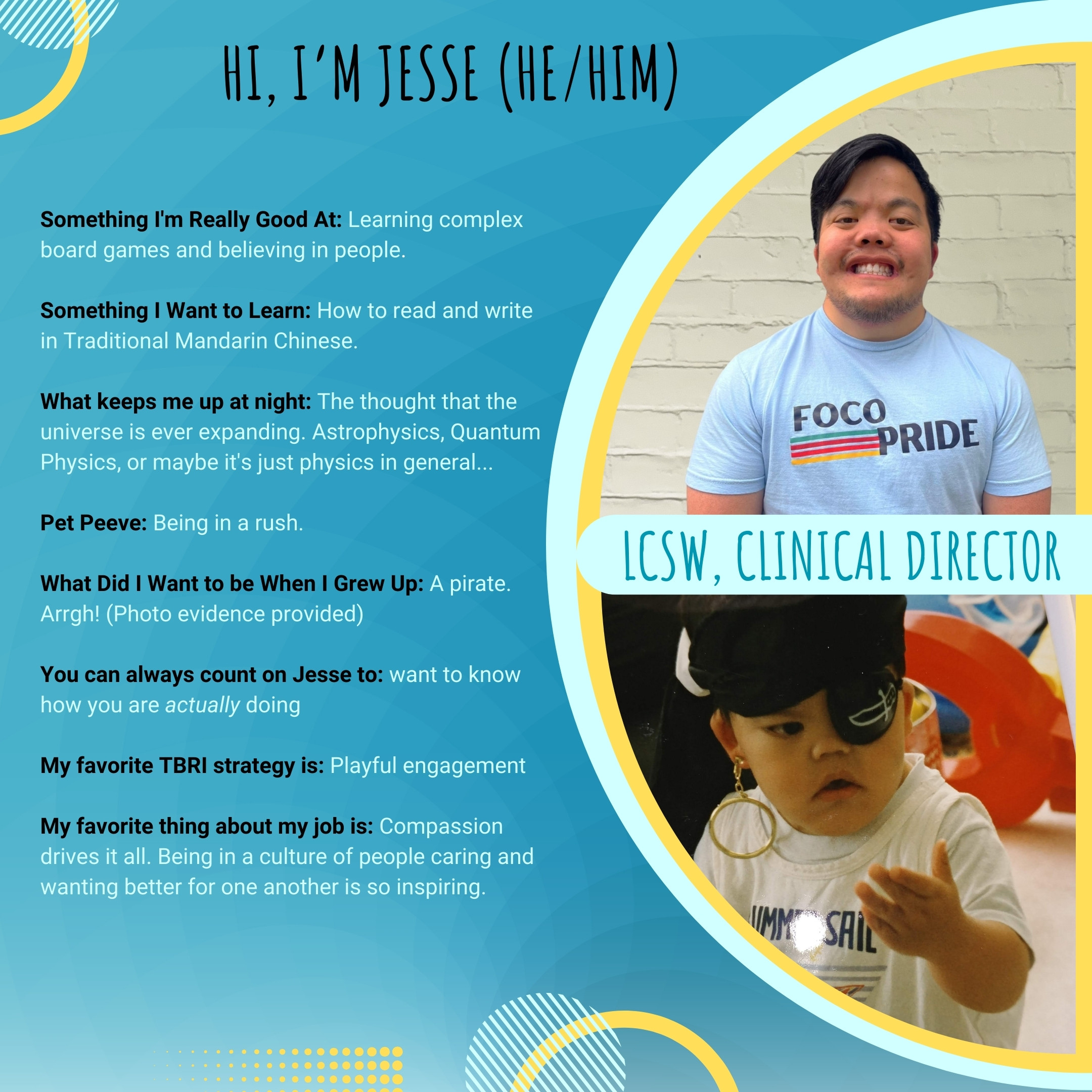
Jesse began at the Jacob Center originally as a Youth and Family Coach in 2015. Presently, Jesse is a therapist with a Master’s in Social Work (MSW) from Metropolitan State University of Denver and completed his Licensed Clinical Social Work (LCSW) license in 2023. He aspires to combat injustice and dismantle systems of oppression with specific focus towards intergenerational trauma, development of resilience, and unshaming. He strives to continue growing in advocacy and equity through lived and learned experiences. In his free time, Jesse enjoys playing D&D, spending time with his dog, playing complex board games, and traveling with his partner!
What is working with Jesse like?
Jesse approaches therapy as a hope merchant focused on developing trusting rapport to foster self-healing and empowering spaces. Jesse draws from trauma-responsive, unshaming, and hope-centric techniques that include Internal Family Systems (IFS), Dialectical Behavioral Therapy (DBT), Object Relations Theory, and solution-focused therapy. He believes that healing and safety comes from within and establishing control for clients provides strength in change.